Our story · Groot Constantia, 1970s to the early 1980s
A restaurant in the Jonkershuis, and a fudge recipe.
Before there was a purple box, there was my mother’s restaurant on the oldest wine estate in South Africa. This is where the fudge comes from.
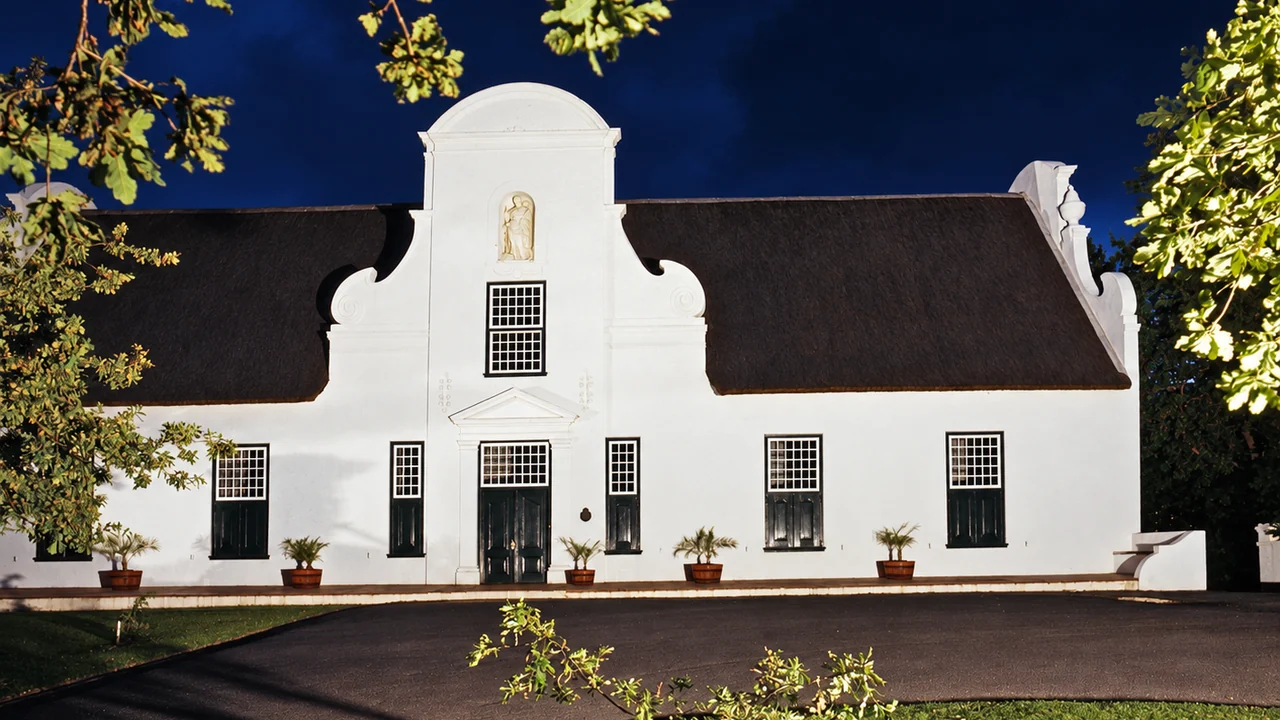
The estate
Groot Constantia, in those years.
By the 1970s Groot Constantia was already three centuries old. The manor house, rebuilt in its Cape Dutch style after the fire of 1925, had become a museum, and a wine museum had opened in the old cellar.
From 1976 a control board ran the farm’s winemaking. In 1984 the whole estate was declared a national monument.
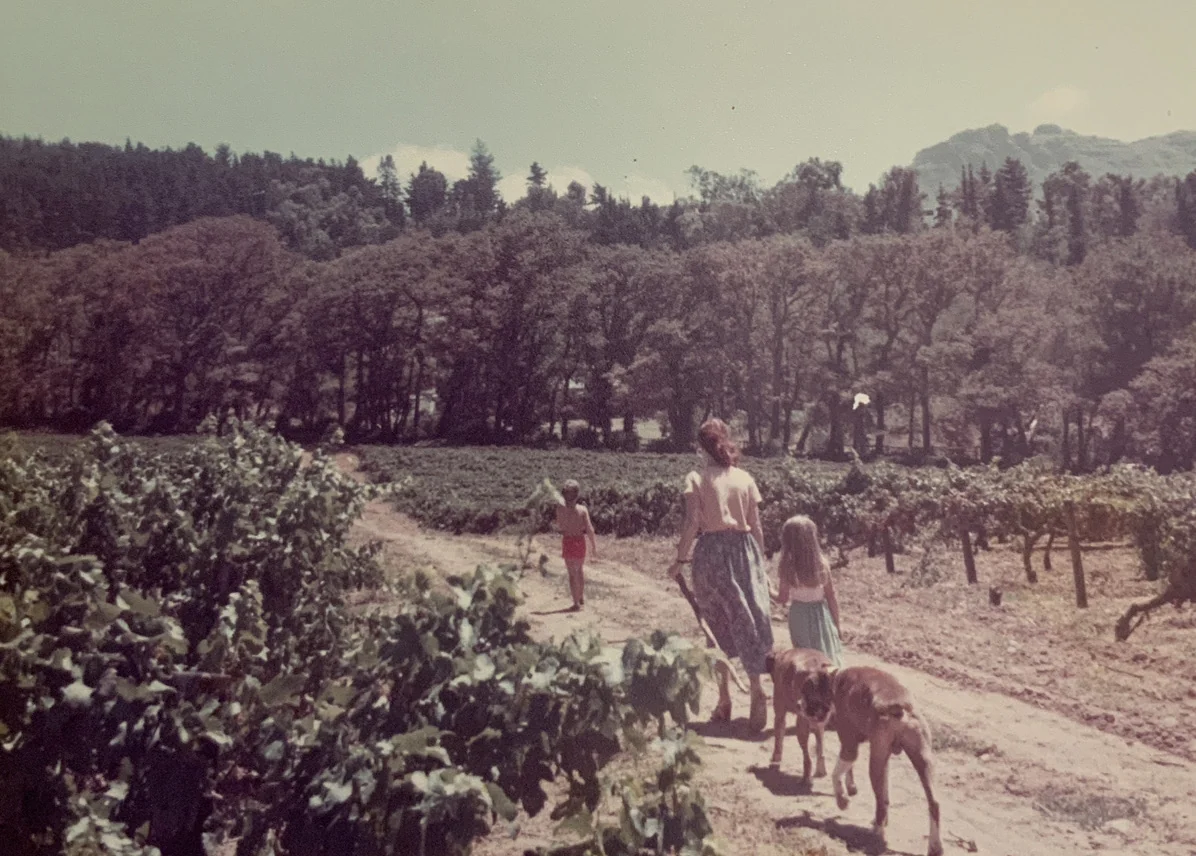
[FAMILY MEMORY: what the estate felt like then: the vineyards, the visitors, the mountain behind]
- 1685Simon van der Stel is granted the land. Groot Constantia becomes South Africa’s oldest wine estate.
- 1885The Cape government buys the estate and runs it as an experimental wine farm.
- 1925–26Fire destroys the manor house. It is rebuilt, and opens as a museum the following year.
- 1971A wine museum opens in part of the old cellar.
- 1970sMy mother runs Groot Constantia Restaurant, and makes the traditional fudge there.
- 1976The Groot Constantia Control Board takes over the farm’s winemaking.
- Early 1980s[FAMILY MEMORY: the restaurant in the early 80s]
- 1984The whole Groot Constantia estate is declared a national monument.
- 2001We start making the fudge in the UK.
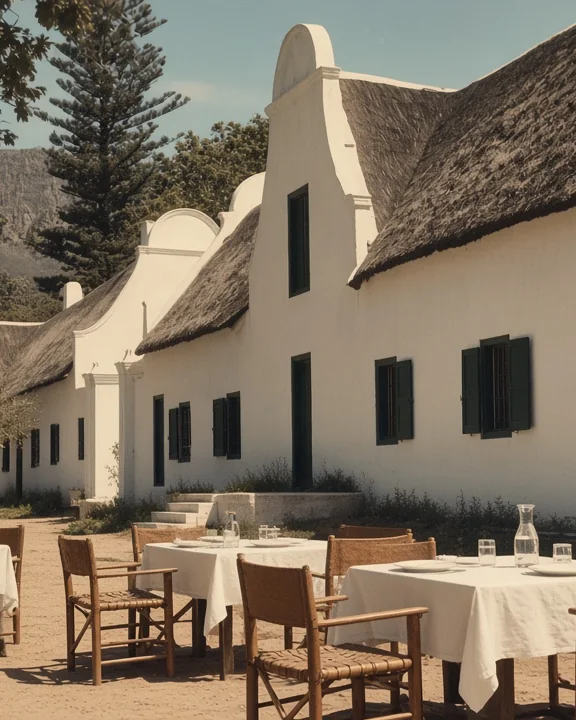
The Jonkershuis
A dower house, full of tables.
On the old Cape estates, the jonkershuis was the dower house: home to the owner’s widow, or to the eldest son once he married. At Groot Constantia it is a gabled, thick-walled building on the werf, the yard around the manor house.
This is where my mother ran the restaurant. It was famous for its preserves, its wines and its mix of Cape Malay and South African dishes.
[FAMILY MEMORY: a busy lunchtime, a regular dish, a favourite table]
The fudge
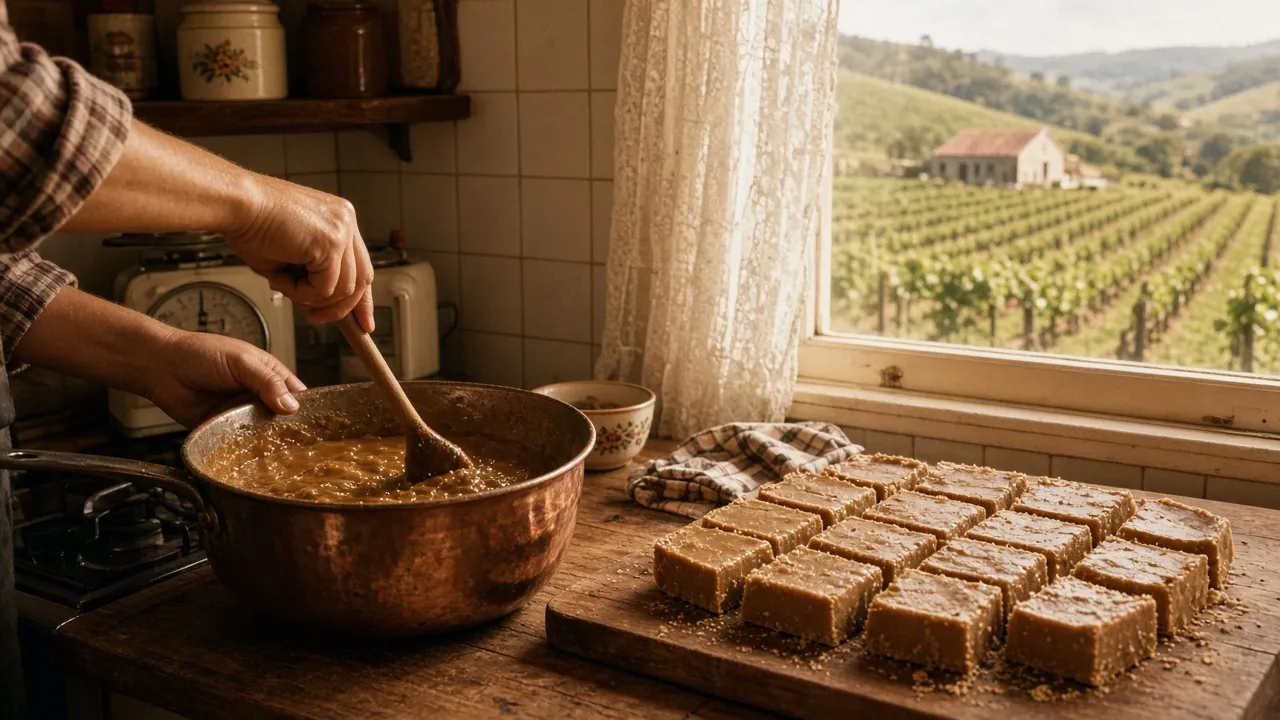
Made in the restaurant kitchen.
It’s where she made the traditional fudge, from sweetened condensed milk, sugar, butter and golden syrup. It’s the recipe we still use.
[FAMILY MEMORY: how it was served, or who bought it]
2001 · London
From the valley to London.
In 2001 we began making it here in the UK, for South Africans far from home.
“…each tablet of fudge while dreaming of home and the hot South African summers.”
— [NAME]